AI-Powered Customer Service & Hospitality Training
A service standard is easy to follow until the customer is angry.
Training can explain the process: listen carefully, show empathy, follow the process, and resolve the problem. Then, the solution the customer wants is not available.
Their frustration increases. Other customers are waiting. Suddenly, applying the service standard is much harder than describing it.
Train for that moment.
Practice the interactions that define the customer experience.
Complaints
Practice addressing performance clearly while responding to employee reactions and keeping the conversation productive.
Escalations
Practice staying responsive and professional as customer frustration increases and the interaction becomes more difficult.
Service recovery
Practice rebuilding trust and navigating the conversation after the customer experience has already gone wrong.
Difficult requests
Practice communicating boundaries, policies, or limitations without escalating a difficult customer interaction.
De-escalation
Practice navigating emotionally charged interactions while staying professional and in control.
Guest needs & expectations
Practice recognizing customer needs, setting expectations, and adapting service as the interaction unfolds.
Real customer interactions don't follow the script.
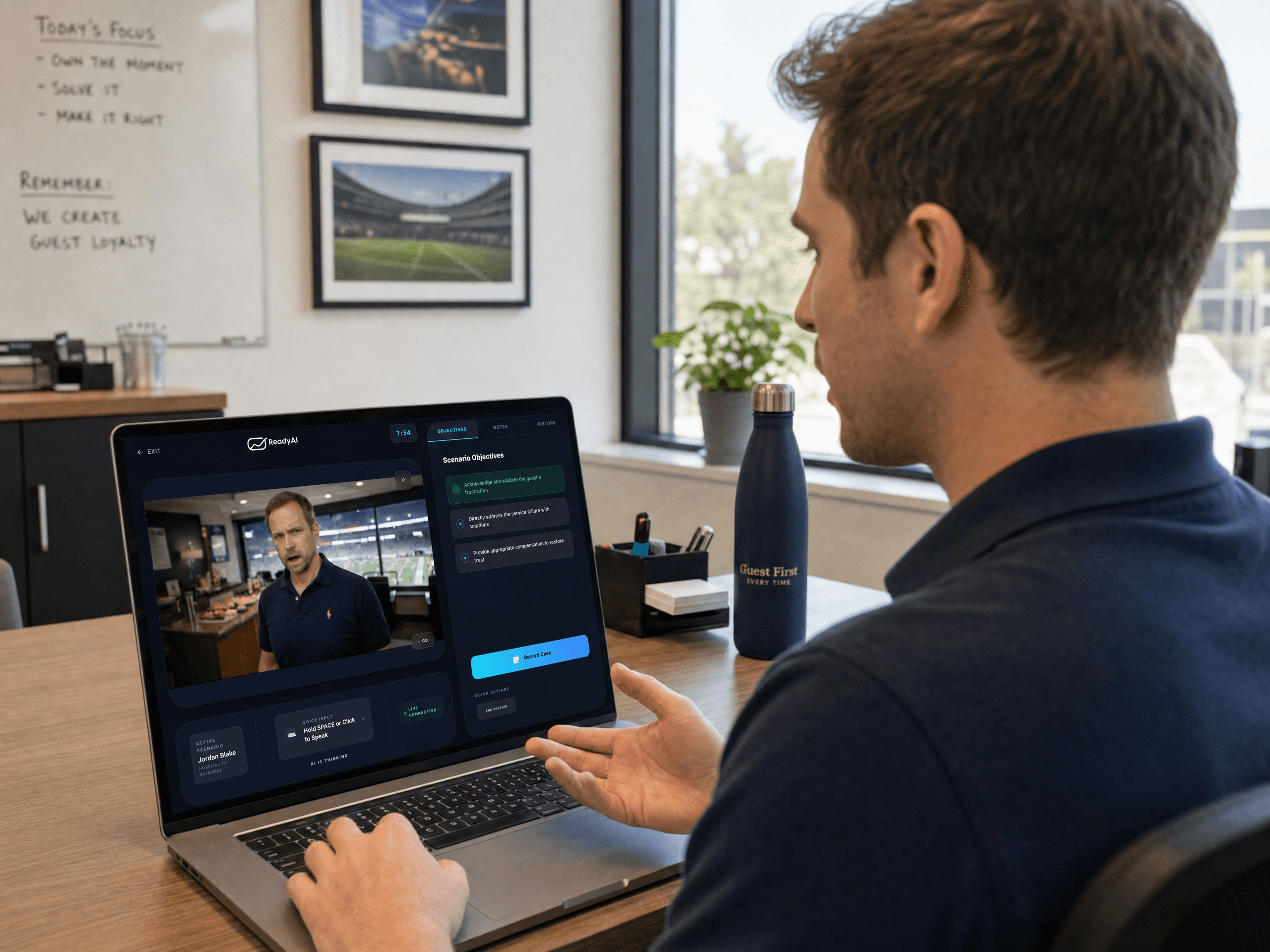


Consistent service starts with consistent practice.
Turn service standards into behavior.
Give employees repeated opportunities to apply your organization's service expectations in realistic customer situations.
Build confidence before it counts.
Give frontline teams repeated practice with challenging customer situations before they have to navigate them on the job.
Prepare teams across locations.
Use shared scenarios and performance expectations to create more consistent preparation across teams and locations.
Find recurring gaps.
Identify where employees struggle and focus coaching or reinforcement on the areas that need attention.
Find the service gaps betfore your customers experience them.
ReadyAI shows how frontline employees perform when customer interactions become difficult, giving training and operational leaders insight beyond course completion. Assess the competencies that matter, identify patterns across locations and teams, and focus additional training where it can have the greatest impact.